
High frequency recommended vocabulary
Purpose and Significance of the Test
RS101: Radiated Susceptibility, Magnetic Field Test
Simulates “magnetic leakage attacks” to evaluate whether equipment is affected by low-frequency magnetic field environments. Unlike high-frequency electromagnetic waves, low-frequency magnetic fields are not easily shielded by metal enclosures. They can penetrate non-ferromagnetic materials and directly interact with internal circuits and components.
CS101: Conducted Susceptibility, Power Leads Test
Evaluates the ability of equipment power inputs to withstand low-frequency conducted disturbances and resist “power grid pollution,” ensuring stable operation without malfunction, false triggering, or system crashes during unstable power conditions.
In military platforms, power distribution lines are far from ideal DC supplies or perfect utility-frequency sine waves. When generator speeds fluctuate, high-power motors start, switching power supplies commutate, or batteries charge and discharge, large amounts of ripple, harmonics, and transient fluctuations are superimposed onto DC power lines.
• Performance degradation: screen flicker, increased communication bit error rates;
• Functional disorder: logic errors, unintended relay activation;
• System crash and reboot: reset caused by ripple interference in power circuits.
Test Requirements
According to GJB 151 and MIL-STD-461 standards, the CS101 test frequency range is 25 Hz to 150 kHz, while the RS101 test frequency range is 25 Hz to 100 kHz.
3CTEST Test Solution
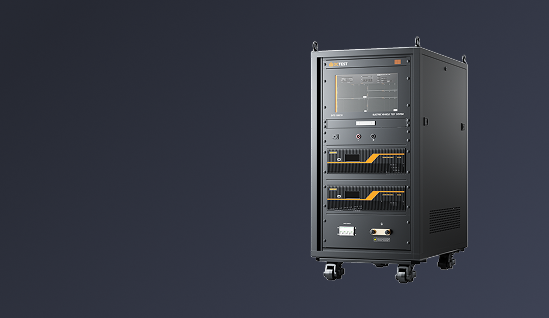
The system provides broad coverage of applicable standards and complies with RS101 and CS101 test methods as defined in GJB 151C and MIL‑STD‑461G. It also supports CS109 structure current conducted susceptibility testing.
Fully Integrated Design · Precise · Efficient · Reliable
Test System Equipment Connection Diagram

※ The system is designed in strict accordance with GJB 151B / MIL-STD-461G test configuration requirements, supporting full-frequency coverage for RS101 (25 Hz ~ 100 kHz) and CS101 (25 Hz ~ 150 kHz). Optional automated test software enables closed-loop calibration and automatic report generation.
Solution Configuration | RS101 Radiated Susceptibility, Magnetic Field · CS101 Conducted Susceptibility, Power Leads | Fully Integrated Design
 Phone: +86-512-68413700
 Email: info@3ctest.cn
 Address:No.99 E'meishan Rd, SND, Suzhou, Jiangsu, 215153, China,Suzhou, Jiangsu, 215153, China



© 2025 Suzhou 3CTEST

 Leave a Message